Natural Pest Control Solutions
Working WITH nature, not against it.
Starting a homestead is a whirlwind of planting, building, and inevitably, battling pests. While it might be tempting to grab a chemical spray when you see your kale being devoured, those toxins disrupt the delicate ecosystem you’re trying to build.
Incorporating natural pest control into your homesteading system isn’t just about killing bugs; it’s about creating a balanced environment where nature does the heavy lifting for you. Here is how to get started.
1. Build a Defense-First Garden Layout
Before you even reach for a spray, design your garden to protect itself.
Companion Planting: This is the cornerstone of a natural system. Interplant marigolds and basil among your tomatoes and peppers; their scent masks your crops from hungry pests.
BONUS: Marigolds and basil are staples in your herb pantry and both are safe and nutritious for your chickens.
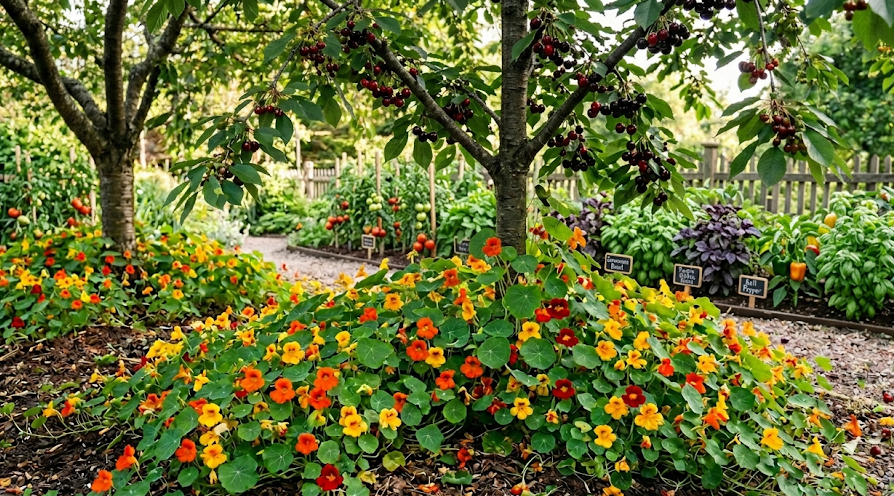
Trap Cropping: Be strategic. Plant “sacrificial” crops like nasturtiums or sunflowers on the perimeter of your garden. These act as decoys, drawing aphids and beetles away from your primary food source. Nasturtiums work especially well when paired with fruit trees that tend to attract beetles.
BONUS: Nasturtiums are completely edible for humans, too. Add these peppery blossoms to green salads for a bold look and a spicy kick in taste and nutrition!
2. Recruit a “Mercenary” Army
On a homestead, you aren’t the only one working. You want to attract predatory insects that view garden pests as a buffet.
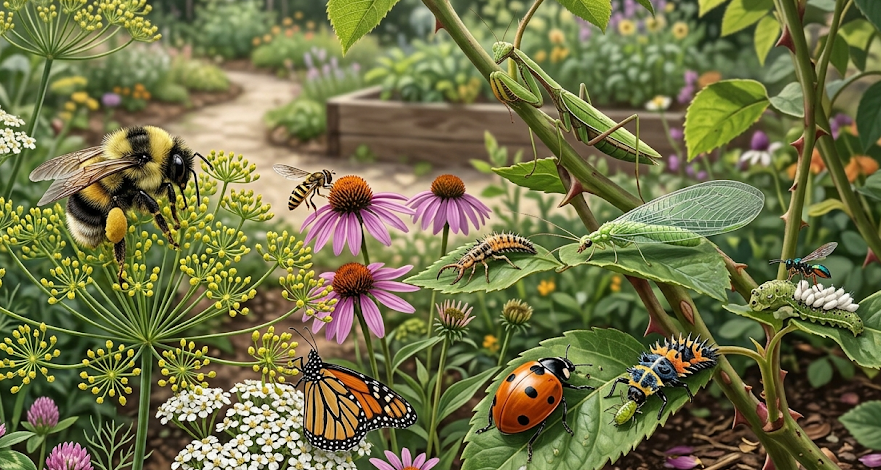
Encourage Beneficials: Plant flowering herbs like dill or fennel to attract ladybugs, lacewings, and parasitic wasps. These tiny allies will hunt down aphids and caterpillars far more efficiently than you can.
Learn to identify whether the bugs you see are friend or foe by using iNaturalist. This easy, collaborative app also helps you identify plants, animals, trees and flowers. It’s an all-inclusive field guide right on your phone!
3. Establish Your “Emergency Kit”
Even with a great layout, outbreaks happen. Keep these non-toxic essentials in your homestead shed:
Neem Oil: This is your multi-tool. It disrupts the life cycle of pests like whiteflies and mites without the long-term environmental damage of synthetics.
Diatomaceous Earth (DE): Sprinkle this around the base of plants or in the cracks of your barn. It’s a physical deterrent that dehydrates crawling insects like ants and beetles.
*NOTE: Does NOT work well on fire ants. Nothing does. Sorry.
Homemade Solutions: Keep a spray bottle of mild soap and water or a garlic-onion brew ready. These are perfect for targeted “spot treatments” when you see a sudden influx of soft-bodied insects.
When using soap solutions, pay attention to timing. Spraying certain plants at the wrong time of day will kill more than pests. Don’t ask me how I know.
4. Don’t Forget the Farmhouse
Remember not to stop at the garden gate. To keep your home pest-free naturally:
Essential Oils: A mixture of peppermint or cedarwood oil sprayed around windowsills and doorways keeps spiders and ants outside where they can do the most good.
Citrus & Vinegar: Use these for cleaning inside surfaces; they don’t just sanitize, they strip away the scent trails that ants use to find their way to your pantry.
The Homesteader’s Golden Rule: Consistency
Natural solutions aren’t “one and done.” Because they break down quickly and safely, you’ll need to reapply regularly, especially after rain. By shifting your mindset from “eradication” to “management,” you’ll build a homestead that is healthier for your plants, your animals, and your family.