What’s the Deal with Quail Eggs?: Nutrition benefits compared to other common egg types.
TL;DR: The Tiny Powerhouse in Your Backyard
If you’re looking for a suburban-friendly superfood, look no further than the quail egg. While small, these speckled gems are nutritionally denser than chicken eggs when compared weight-for-weight.
The Highlights:
- More Nutrient-Dense: Quail eggs contain significantly more Vitamin B12, Iron, and Riboflavin than chicken eggs.
- Suburban-Friendly: Quail are quiet, take up very little space, and start laying in just 6 weeks.
- The Yolk Factor: A higher yolk-to-white ratio means more healthy fats and fat-soluble vitamins in every bite.
- Cooking Tip: Use a 5-to-1 ratio when replacing chicken eggs in recipes, and always use quail egg scissors for a clean crack!

Hey everyone, and welcome back to the homestead!
If you’ve been following our journey, you know we’re big believers in maximizing every square foot of our suburban lot. This year, we’re making a big addition to our backyard livestock: we’ve added a small collection of Coturnix quail.
The biggest question I get when folks see their tiny, speckled eggs is, “Why would you eat quail eggs?”
The answer is this: they might be small, but they are packed with an incredible amount of nutrition. Compared with eggs from other common livestock birds, quail comes out the clear winner.
Why We Added Quail
Quail are a suburban homesteader’s dream. They are:
- Quiet: They make soft, pleasant chirping sounds.
- Compact: You can raise a productive flock in a very small space (even a stacked enclosure).
- Fast: They start laying eggs in as little as 6 weeks!
But the best part is the harvest. After researching the nutrition, we realized they are a serious food source.
Quail Egg vs. Chicken Egg: The Real Deal
It’s tempting to think that because a quail egg is roughly one-fifth the size of a chicken egg, it has one-fifth the nutrition. This is not true. When you compare them gram-for-gram (by weight), the tiny quail egg comes out on top.
The biggest difference is the ratio. Chicken eggs have a large amount of white (albumen) compared to the yolk. Quail eggs have a much larger yolk compared to their white. Since most of the healthy fats, vitamins, and minerals are located in the yolk, this makes the quail egg denser in many nutrients.
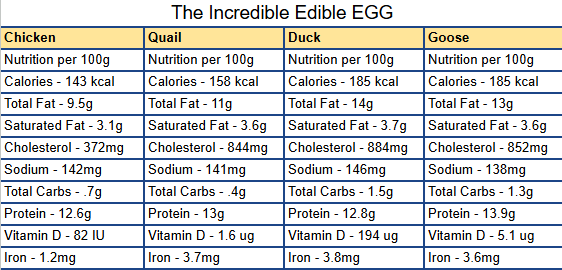
Homesteader’s Note: While the cholesterol numbers look high on paper, remember that most modern nutritional science suggests that dietary cholesterol (from whole foods like eggs) has a much smaller impact on blood cholesterol for most people than previously thought. Plus, these home-grown eggs are packed with Omega-3s if your birds are out scratching in the grass!
Data sourced and verified via USDA FoodData Central.
The Nutritional Highlights (Verified)
Let’s look at why these little speckled gems are considered a superfood. (All data is sourced from the USDA FoodData Central database unless otherwise noted).
1. Packed with High-Quality Protein
Like all eggs, quail eggs provide “complete protein,” meaning they contain all the essential amino acids your body needs but cannot make on its own. While one egg won’t fill you up, four or five quail eggs (which equal roughly one large chicken egg by weight) provide a significant protein boost to your menu.
2. Rich in Essential Vitamins (Especially B Vitamins)
When you compare them by weight to chicken eggs, quail eggs are particularly high in several key vitamins:
- Vitamin B12: Essential for nerve function and energy production. Gram-for-gram, quail eggs contain nearly three times as much B12 as chicken eggs [1].
- Riboflavin (Vitamin B2): Important for metabolism and converting food into energy. Quail eggs significantly outperform chicken eggs here too [1].
- Vitamin A: Crucial for vision, immune health, and skin. Both eggs are good sources, but the rich, deep-orange yolks of pasture-raised quail indicate high levels.
3. Loaded with Key Minerals
Again, on a weight-for-weight basis, quail eggs offer more of certain minerals:
- Iron: Quail eggs contain roughly double the iron found in chicken eggs. Iron is vital for carrying oxygen in your blood and preventing fatigue [1].
- Phosphorus: Important for bone health.
4. The “Allergy-Friendly” Myth (and Reality)
You might read online that quail eggs cannot cause allergies or that they “cure” chicken egg allergies. This is a myth. Quail eggs contain many of the same proteins as chicken eggs and can absolutely cause allergic reactions in sensitive individuals [2].
However, there is a fascinating kernel of truth regarding allergies:
- Ovomucoid: Like chicken eggs, quail eggs contain a protein called ovomucoid.
- Unique Properties: Some research suggests that the specific type of ovomucoid found in quail eggs might act as a natural anti-allergy agent. This unique structure may help inhibit certain inflammatory responses in the body [3, 4].
So, while they are not a “cure” and aren’t safe for everyone with an egg allergy, they may offer unique therapeutic benefits that chicken eggs do not. (Always consult an allergist if you have concerns).
How We Use Them on the Homestead
Because of their size, they require a bit of a mindset shift in the kitchen.
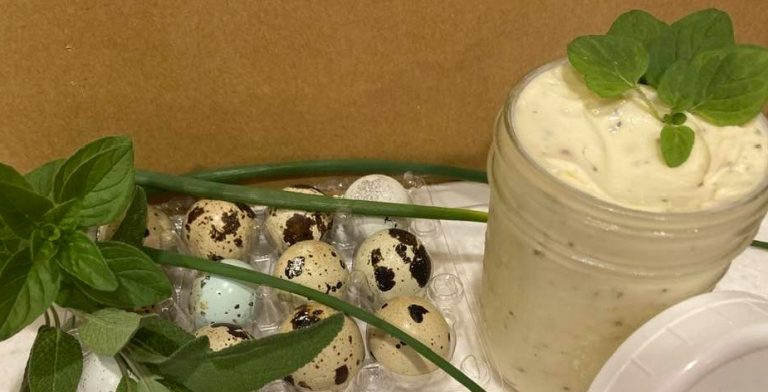
- Cracking: Their shells are delicate, but the inner membrane is very tough. Don’t try to tap them on the counter. The best tool is a pair of specialty quail egg scissors. They snip the top right off cleanly.
- The 5-to-1 Rule: For baking or scrambles, we generally use 5 quail eggs to replace 1 large chicken egg.
- The Ultimate Snack: Soft-boiled quail eggs are incredible. Boil them for exactly 2 minutes, then plunge them into ice water. They peel easily and are perfect in salads, bento boxes, or just sprinkled with sea salt and smoked paprika.
Conclusion: A Tiny Powerhouse
Raising quail on our suburban homestead is rewarding in many ways. They are quiet, efficient, and endlessly entertaining. Knowing that the food they provide is a verified superfood—richer in B12, iron, and riboflavin than our chickens’ eggs—makes them an essential part of our self-sufficient life.
If you’re on the fence about adding these tiny birds to your backyard, I hope this information helps you make a decision. They prove that good things really do come in small, speckled packages.
Until next time, happy homesteading!
References (Verified Data Sources)
- U.S. Department of Agriculture (USDA), Agricultural Research Service. (n.d.). FoodData Central. Retrieved from https://fdc.nal.usda.gov/ (Data compared for “Egg, quail, whole, fresh, raw” [FDC ID: 172191] and “Egg, large, chicken, whole, raw” [FDC ID: 171287]).
- Bruni, F. M., et al. (2018). “Quail egg allergy: A case report and review of the literature.” Clinical and Molecular Allergy, 16(1), 22. [This study confirms that while rare, quail egg allergy is real].
- Feeney, R. E., et al. (1969). “Comparative biochemistry of avian ovomucoids.” Journal of Biological Chemistry, 244(8), 1957-1963. [Early study establishing the biochemical uniqueness of quail ovomucoid].
- Karthikeyan, R., et al. (2017). “Potential anti-allergic activity of quail egg white.” Journal of Food Biochemistry, 41(4), e12368. [Recent research exploring the anti-inflammatory and anti-allergic mechanisms of quail egg proteins].